
Need assistance?

How Adaptive Dance Can Help Autistic Adolescents Build Confidence and Connection

According to the Centers for Disease Control and Prevention (CDC, 2025), about 1 in 31 (3.2%) children aged 8 years have been identified with autism spectrum disorder (ASD). Adolescents with autism often have difficulties with social communication and interactions with peers, characterized by a unique pattern of behavior depending on the person (Mayo Clinic, 2025). In our study examining the effects of adaptive dance on adolescents’ social emotional regulation and peer interaction skills, we used adaptive dance to not only reduce common symptoms in adolescents with ASD, such as anxiety and mood swings, but also to foster social and confidence skills that increase the ability to communicate and form connections between peers.

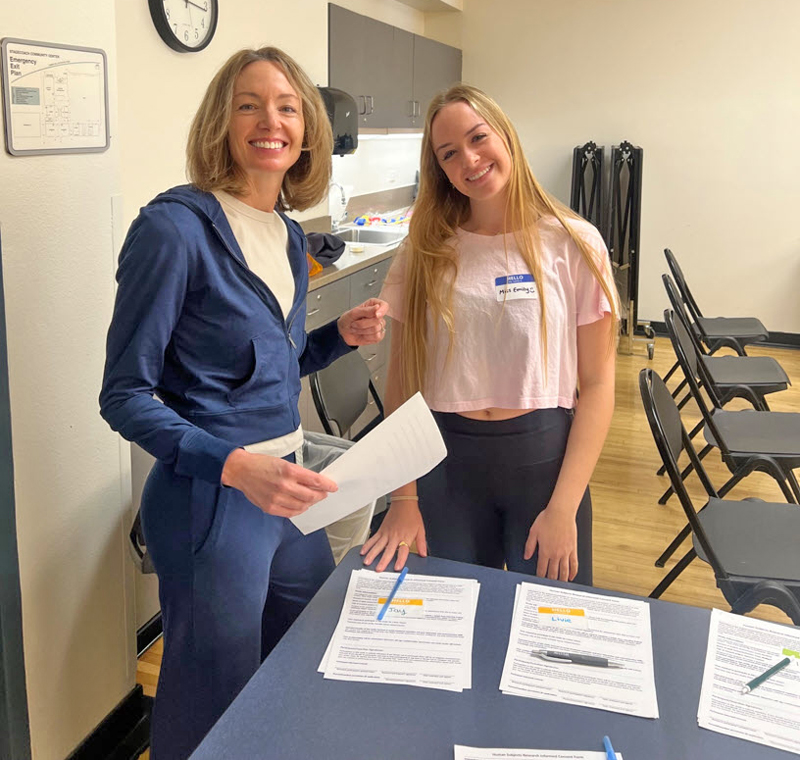
Emily Ginsberg and her mom before the first class of the case study.
What is Adaptive Dance?
Adaptive dance is a recreational activity for people with specific needs that is known for its friendly and tolerant nature and adaptable structure dependent on the participants and goals (National Centre for Dance Therapy, 2020). In simple terms, I would describe adaptive dance as modified choreography that helps integrate imagination with awareness to foster the relationship between the body and mind. Adaptive dance, unlike typical therapeutic interventions, provides an outlet for creativity to be expressed nonverbally through movement, ultimately leading to a notable increase in self-esteem and the formation of friendships (Ginsberg, 2026).
In a typical adaptive dance class, we will begin with a rhythm-based warm-up, clapping our hands and stomping our feet to the beat to reconnect with the feeling of movement alongside promoting attention and focus. After that, the students will be taught, in ten-second increments, a short dance combo to an upbeat and engaging song that enhances memory and supports creativity. For example, at multiple points throughout the dance, students will be given the chance to choose their own poses, share what feeling they are choosing to embody, or modify any specific move to fit their needs. In addition, while teaching new dance moves, I will always make connections to tangible, entertaining actions so that students can draw connections back to familiar concepts: reaching up towards the ceiling is now throwing confetti, circular motions are now imaginary paintings in the air, and flicking our wrists are now hundreds of fireworks going off. When taught in this manner, dance morphs into a center for experimentation and wonder. After rehearsing and performing multiple times, we will launch our circle time. Simple, prompted questions such as “What is your favorite animal?” or “If you could have any superpower, what would it be?” can be responded to either with full explanations, one-word answers, or simple gestures. By having multiple different options for students, the pressure to conform is removed, and these circle times serve purely as a chance for connection, empathy, and communal understanding — a sense of trust that is achieved only after building up confidence by communicating nonverbally through dance. At the end of every class, students are challenged with the opportunity to compliment one another, and then we initiate our final breathing cool-down so that feelings of calmness carry on throughout the day.
Studying the Impact
This past spring, I launched a three-month case study examining the effects of adaptive dance on social emotional regulation and peer interaction skills for adolescents with autism. This study included 10 adolescents, both male and female, aged 9–18, and a total of six one-hour adaptive dance classes. To track behavioral changes over time, I collected data from parents, students, observers, and instructors after every class to evaluate changes in social interactions, emotional regulation, and behavior.
After closely analyzing mean development across all categories over time, this research provided evidence that after participating in the adaptive dance program, the students showed practical improvements in social connectedness, emotional regulation and confidence, and a decrease in social anxiety when interacting with peers and family (Ginsberg, 2026). My research was recently published in the 2026 Spring/Summer Issue of the Curieux Review, and I hope to continue highlighting the importance of incorporating adaptive dance as a means for treatment in adolescent development.
Expanding the Program
The real-world impact of adaptive dance programs can promote inclusion of adolescents with ASD and help foster an understanding of effective treatments and interventions (Ginsberg, 2026). I have worked closely with the Autism Tree Foundation in the past, and I am currently partnering with the special education department at La Costa Canyon High School to expand adaptive dance programs on school campuses. My goal is to create opportunities for more students with autism to participate in an inclusive environment where they can connect with peers and develop fundamental social emotional skills, as well as give other students a chance to volunteer and create meaningful connections. Through these programs, I hope to promote kindness, empathy, and equal opportunities for all individuals. My goal is for this program to become a model for other schools and eventually expand throughout school districts so that more students and families have access to adaptive dance.
Why This Matters
Many autistic adolescents have limited opportunities to participate in extracurricular activities that are designed to meet their specific needs and foster a supportive community. These free, adaptive dance programs create accessible spaces where all individuals can participate together to grow social interaction skills and confidence that is proven to positively influence many aspects of daily life. I hope that this research encourages more schools and communities to recognize that inclusion isn’t just about providing all students with opportunities, but rather creating spaces where every student feels they belong. Adaptive dance programs, and all I envision them becoming, are realistic opportunities that have the potential to create groundbreaking effects in schools, community centers, and current therapy methods.
Emily Ginsberg is the Founder and Lead Researcher of The Rhythm and Regulation Project. For more information, email [email protected] and visit therhythmandregulationproject.org.
References
Autism Spectrum Disorder – Symptoms and Causes – Mayo Clinic, (2025). www.mayoclinic.org/diseases-conditions/autism-spectrum-disorder/symptoms-causes/syc-20352928. Accessed 28 July 2026.
Data and Statistics on Autism Spectrum Disorder | Autism Spectrum Disorder (ASD) | CDC, www.cdc.gov/autism/data-research/index.html. Accessed 8 July 2026.
Ginsberg, E. (2026). The Effect of Adaptive Dance on Adolescents’ Social Emotional Regulation and Peer Interaction Skills. The Curieux Review, Spring/Summer 2026. (May Part Two), p. 84-98 www.curieuxreview.com/_files/ugd/60ed3c_2594892de5bf421296ce79f18df58e20.pdf
National Center for Dance Therapy. (2020). “Health and Dance Therapy.” Les Grands Ballets Canadiens, grandsballets.com/en/support-us/health-and-dance-therapy/. Accessed 12 Apr. 2026.

Advertisement
