
Need assistance?


Key takeaways:
- The FDA selected initial participants for its READI-Home Innovation Challenge to reduce hospital readmissions.
- Selected devices include a wireless EEG system for monitoring sleep and seizures and a vibrational crib mattress for infants.
- Participants enter an interaction phase with the FDA for early engagement and rapid feedback on device design and testing.
The US Food and Drug Administration (FDA) has selected the initial participants for its Reducing Readmissions through Device Innovation for the Home (READI-Home) Innovation Challenge.
The program aims to accelerate patient access to medical device technologies intended to support patients and caregivers in the home setting following an acute hospital stay. This initiative is designed to help prevent avoidable readmissions, which create significant logistical and financial challenges.
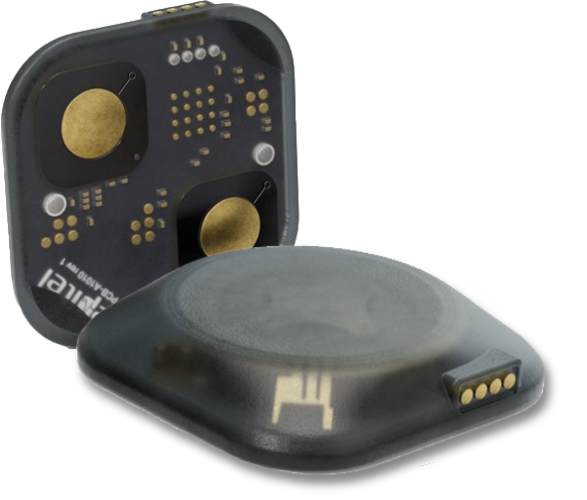
Among the selected technologies are devices with applications in sleep medicine. Epitel’s REMI Neuro Monitoring Home Health Hub (photo above) is a wireless wearable electroencephalography (EEG) system designed for extended-duration monitoring. Applied at the point of discharge, it is intended for use in home and ambulatory environments by individuals six years of age and older to assess for potential seizures, poor sleep, and delirium.
Another selected device is the Prapela Therapeutic Vibrational Crib Mattress by Prapela. This crib mattress is embedded with a miniaturized vibrating actuator that delivers low-amplitude mechanical vibration during infant sleep. It aims to reduce the frequency, duration, and severity of hypoxemic and bradycardic episodes in infants with single-ventricle heart disease.
“We are incredibly honored that the FDA has selected REMI as one of the inaugural technologies for the READI-Home Innovation Challenge,” says Mark Lehmkuhle, chief technology officer at Epitel, in a release. “Our mission has always been to make brain health monitoring more accessible and comfortable. Working directly with the FDA allows us to rapidly adapt neuro-monitoring for home environments, helping support post-discharge patients and easing pressure on overloaded health systems.”
The FDA also selected three other devices to advance to the interaction phase:
- BD Self-Collection Kit: A home self-collection blood sampling kit designed by Becton, Dickinson and Company.
- CRS Solution: An artificial intelligence-based software medical device by Current Health Limited for early identification of patients at risk of developing cytokine release syndrome.
- Aurora System: A wearable, multi-sensor adhesive patch by Skribe Medical designed to non-invasively estimate left ventricular ejection fraction.
Selected participants advance to the program’s interaction phase, which provides early engagement with the FDA. This phase allows for rapid feedback to help refine device design and testing for home-use indications.
More in Emerging Sleep Tech:

Advertisement
