
Need assistance?

I Was 63 When I Learned I Was Autistic. Suddenly, My Entire Life Made Sense

When I was a little girl, I often played alone.
While other children instinctively understood the social dance of the playground, I hovered at the edges, unsure of the rules. Teachers described me as bright but socially awkward. Report cards noted that I did not always “play well with peers.” I did not understand why connecting with others seemed to come so naturally to everyone else.

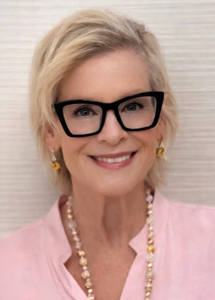
Bonnie Schneider Priever
What I did understand was that I felt different.
For decades, I carried that feeling with me.
I was “successful” by most conventional measures. I graduated from UCLA with a 3.7 GPA, pursued rabbinical studies, built a career as a freelance market researcher, and later became a theater writer and reviewer. Yet no achievement could quiet the persistent feeling that I was somehow missing a piece of information everyone else had been given.
Social interactions felt like a foreign language I had spent a lifetime trying to translate.
Friendships could be confusing. Workplace dynamics often seemed mysterious. After conversations, I often replayed every word in my head, wondering if I had missed something important.
I spent years in therapy searching for answers. Therapists helped me navigate relationships, anxiety, and self-esteem issues, but no one suggested autism.
Then, at age 63, everything changed.
Following a comprehensive neuropsychological evaluation at Cedars-Sinai in Los Angeles, I received a diagnosis of being high-functioning on the autism spectrum disorder.
My immediate reaction was two-fold and surprising:
I felt relief.
And grief.
Relief because I finally had an explanation for experiences that had followed me since childhood. Grief because I could not stop wondering how different my life might have been if someone had recognized the signs decades earlier.
Suddenly, memories of feelings that once felt disconnected began to form a coherent narrative.
The exhaustion I felt after social gatherings. The constant self-monitoring. The pressure to fit in. The feeling of being misunderstood. The tendency to blame myself whenever relationships became difficult.
For the first time, I understood that these weren’t personal shortcomings.
They were part of the way my brain worked.
What I did not know until my diagnosis is that my story is far from unique.
Many women of my generation slipped through the cracks because autism research and diagnostic criteria historically focused on boys. Women often present differently. We learn to mask. We study social behavior. We become experts at appearing “normal,” even when we’re struggling internally.
As a result, countless women spend years believing they are flawed rather than simply different.
Looking back, I can see how much energy I devoted to trying to become the person I thought I was supposed to be.
I learned to camouflage my confusion. I worked overtime to understand social expectations. I constantly questioned my own instincts.
The irony is that while I spent much of my life trying to fit into conventional molds, some of my greatest strengths emerged precisely because I did not think conventionally.
Curiosity became my compass.
That same curiosity eventually inspired me to write my debut novel, Cece in Wonder Land. Although the book is fiction, the protagonist’s journey reflects many of my own experiences searching for belonging, meaning, and self-understanding.in
Only now do I recognize how much of that search was connected to my undiagnosed autism.
After receiving my diagnosis, I found myself mourning the years spent without answers. I thought about the support systems I never had, the accommodations I never knew to ask for, and the self-compassion I wish I had shown myself sooner.
But alongside the grief came something else: freedom.
For the first time, I stopped asking, “What’s wrong with me?”
Instead, I began asking a different question: “What if there was never anything wrong with me at all?”
That shift changed everything.
My diagnosis did not alter my identity. It clarified it.
I am still the same person who loves writing, theater, learning, and meaningful conversation. I am still the same person who sometimes finds social situations challenging and prefers authenticity over small talk.
The difference is that I now understand myself with a level of clarity I never thought possible.
Today, conversations about autism are becoming more nuanced, but misconceptions remain — especially when it comes to women diagnosed later in life. Many people still expect autism to look a certain way. They do not always recognize that autistic women can be highly verbal, empathetic, accomplished, creative, and socially engaged while still experiencing the world differently.
That is why stories matter.
Every time a woman shares her experience of a late-life diagnosis, she expands the public understanding of what autism can look like. She helps someone else feel less alone.
I spent much of my life wondering where I fit in.
At 63, I finally found an answer.
It was not the answer I expected, but it was the one I needed.
And if my story helps even one woman recognize herself and seek the understanding she deserves, then sharing it is worth every word.
Bonnie Schneider Priever can be reached at [email protected] or through www.bonnieprieverbooks.com. Her novel, “Cece in Wonder Land,” is available on Amazon, BN.com, Apple Books, and Audible.

Advertisement
