
Need assistance?

Designing for the Gap, Not the Child: What Changes When Assistive Technology Asks the Adult to Learn

My younger cousin was six when I understood the problem I would spend the next two years working on. He was upset about something that had happened in the next room, and the adults who loved him most — his parents and me — stood around him running a checklist. Was he hungry. Was he tired. Was the light too bright. We were guessing. We guessed wrong for a long time, and by the time we got it right, he had stopped trying to tell us.

The reflex in that moment is to conclude that the child needs to communicate more clearly. That reflex is also what a great deal of technology built for autistic children encodes. Applications promise to teach a child to hold eye contact, to label the correct emotion on a card, or to produce facial expressions that a non-autistic adult can parse. In nearly all of them, the child is the variable being adjusted.
I want to make the case for the opposite design decision, both because the research supports it and because building the other way taught me things I did not expect.
The Evidence Points at the Gap, Not the Child
Damian Milton’s account of the double empathy problem reframed what happens in moments like the one in my aunt’s living room. The breakdown between autistic and non-autistic people is a two-way mismatch between different ways of processing and expressing, not a one-way deficit located in the autistic person (Milton, 2012).
Empirical work has since supported that reframing. Sheppard and colleagues found that non-autistic observers were substantially worse at inferring the mental states of autistic people than at inferring those of other non-autistic people (Sheppard et al., 2016). Brewer and colleagues found that autistic facial expressions are produced atypically and are difficult for neurotypical observers to interpret, while autistic observers read those same expressions accurately (Brewer et al., 2016). Crompton and colleagues found that information transfer between autistic people is as effective as transfer between non-autistic people, and that it is mixed pairs where transmission degrades (Crompton et al., 2020).
Read together, these findings say something specific to anyone building a tool. When an adult misreads an autistic child, the failure is distributed across both people. A tool that trains only the child is addressing half of a two-sided problem, and it is the half with the least power to consent to being addressed.
Three Decisions That Follow
When I began building Kora, an application that helps caregivers interpret emotional cues, that literature changed three concrete choices. 
The interface belongs to the adult. My earliest sketches put the app in the child’s hands, because that was the obvious form. It was also wrong. It made the child responsible for translating himself, and it introduced a screen into a moment that was already overwhelming. Moving the interface to the caregiver changed the target of the intervention. The person being asked to learn is the adult.
Suggest, never conclude. Kora offers possible readings rather than verdicts. The distinction is not only legal caution, though it is partly that. A tool that announces that a child is angry invites the adult to stop looking at the child. A tool that offers a possibility, with its uncertainty visible, keeps the adult engaged, which is where the real expertise lives. A parent or a teacher knows things about a specific child that no model can access. The goal of the design is to prompt attention, not to replace it.
Build in the limits on purpose. Kora does not diagnose, screen, or score. It is not a medical device and makes no claim of clinical validity. I would keep that constraint even if the underlying technology improved, because emotion recognition systems trained largely on neurotypical expression carry a predictable failure mode with a population that produces expression differently, which is precisely the finding in Brewer’s work. A system that is confidently wrong about an autistic child, presented to an adult who trusts it, is worse than no system at all.

What I Got Wrong
The most useful thing I can offer other builders is the mistake, which took me months to recognize. My early versions optimized for the caregiver’s convenience: faster reads, fewer taps, cleaner outputs. Every one of those choices pushed quietly toward a tool that answers on the adult’s behalf so that the adult can move on.
That is a tool that ends conversations. What actually helped my cousin was the opposite. It was adults who slowed down, stayed uncertain longer, and asked one more question. So I rebuilt toward friction that earns its cost: showing more than one plausible reading, surfacing what the model was least sure about, and prompting the adult to check an interpretation with the child rather than accept it.
Optimizing for a caregiver’s speed and optimizing for a child’s being understood are not the same objective, and they diverge quietly. Anyone building in this space should write down which one they are actually optimizing, because the interface will drift toward whichever one gets measured.
The Question Worth Asking of Any Tool
Autism technology is entering a period in which models are inexpensive and claims are loud. I would ask of any tool, including my own, a single question: who is this system asking to change? If the answer is only the autistic person, the tool has accepted a premise that the research does not support.
My cousin did not need to become more legible. The adults around him, myself included, needed to become better readers, and needed help doing it. That is a smaller and more honest thing for software to attempt, and I have come to think it is the more useful one.
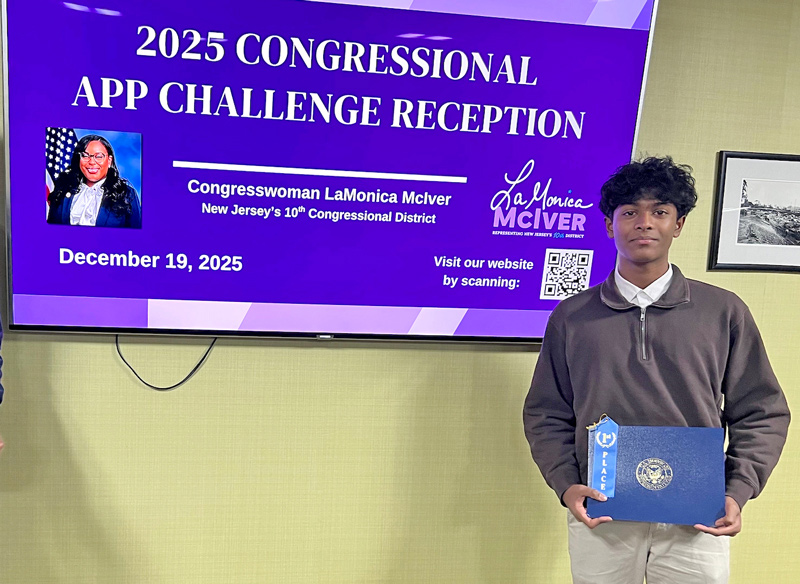
Shashank Madala is a senior at Robbinsville High School in New Jersey and the creator and lead developer of Kora, a free application that helps caregivers interpret the emotional cues of autistic children. Kora received first place in the 2025 Congressional App Challenge for New Jersey’s 10th Congressional District. Shashank can be reached at [email protected], by phone at 609-200-0017, or through his website, www.shashankmadala.com.
References
Brewer, R., Biotti, F., Catmur, C., Press, C., Happe, F., Cook, R., & Bird, G. (2016). Can neurotypical individuals read autistic facial expressions? Atypical production of emotional facial expressions in autism spectrum disorders.
Autism Research, 9(2), 262-271.
Crompton, C. J., Ropar, D., Evans-Williams, C. V., Flynn, E. G., & Fletcher-Watson, S. (2020). Autistic peer-to-peer information transfer is highly effective. Autism, 24(7), 1704-1712.
Milton, D. E. M. (2012). On the ontological status of autism: the double empathy problem. Disability & Society, 27(6), 883-887.
Sheppard, E., Pillai, D., Wong, G. T.-L., Ropar, D., & Mitchell, P. (2016). How easy is it to read the minds of people with autism spectrum disorder? Journal of Autism and Developmental Disorders, 46(4), 1247-1254.

Advertisement
