
Need assistance?


I have a love-hate relationship with the word independence.
I know what independence looks like for a lot of people, or at least what it is considered to look like in this world. I look around and see people who are independent, and sometimes I envy them. I find myself jealous because I want that. I want to be independent, but sometimes I don’t know how to get over the hurdles that would help me become more independent.
Growing up, independence was something I longed for. It was something I dreamed about and wanted for myself. Now, at 36 years old, I am still trying to figure out what independence looks like for me.
I learned that I was autistic at 33, but I don’t feel like I really started my journey of understanding myself until the beginning of this year. Sometimes I wonder what my life would look like if I had been given the tools and support I needed earlier. Would I be further along? Would certain things be easier for me now?
I don’t know the answers to those questions. I only know that I am learning as I go.
There are things that seem incredibly simple to other people that can cause an overwhelming response in my brain and body. Making a phone call is one of them.
I know how to use a phone. I know the person on the other end is there to help me. I know I need to make the appointment. I am completely aware of how simple the task looks.
But my awareness doesn’t stop my reaction.
I become scared and overwhelmed. My heart races. I feel physical pressure. I may feel like I am going to cry. Sometimes I have to fight off a meltdown.
That is one of the hardest parts for me. I am aware of what is happening. I know how it must look from the outside, but I cannot simply tell my brain or body to stop reacting.
Then someone says, “Just do it.”
Suddenly, all of those feelings come flooding in even more, and I feel completely alone. It feels like I have been thrown into a void.
The frustrating part is that I am not necessarily asking someone to do the task for me.
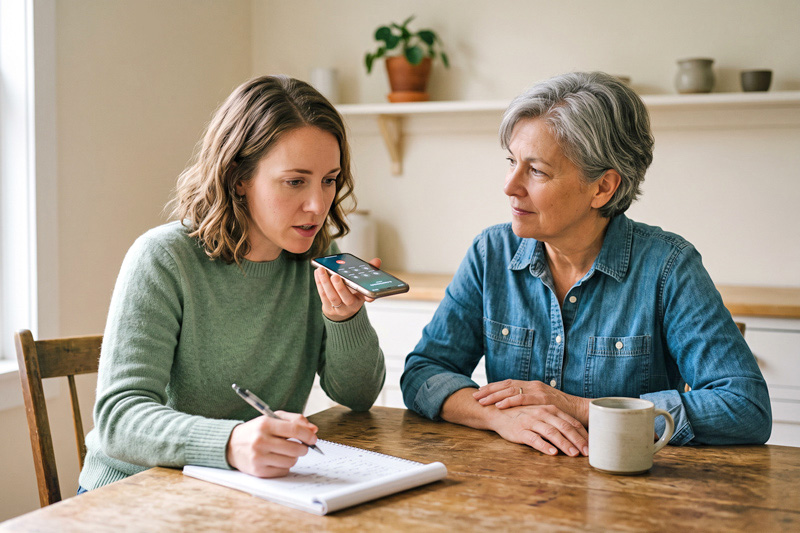
If I need to make an appointment, support could look as simple as someone sitting beside me while I make the call. I can put the phone on speaker. I can talk. If I become confused by a question, I can look at the person beside me and ask what the person on the phone meant. Just knowing that someone is there can make me feel safer and more confident.
I might even become comfortable enough during the conversation to take over completely.
That is still me doing it.
And when the call is over, I may need support afterward. Maybe I need to calm down. Maybe I need a distraction. Maybe I simply need someone there while my body comes down from everything it just experienced.
Sometimes, though, I am forced to do the thing alone.
When that happens, I sometimes hear, “See? You did it. No big deal.”
But I made the phone call. I didn’t necessarily get through it. I may be going through it now.
The task might be finished for everyone else, but I may still be dealing with everything happening inside of me. Sometimes I cry afterward. Sometimes I become upset or irritable. Sometimes I melt down. Then someone may become frustrated with my reaction without understanding what it took for me to complete the task in the first place.
Being capable of completing something does not mean completing it was easy.
It also doesn’t mean support wasn’t needed.
That is where independence becomes complicated for me.
When I picture an independent and successful woman, I have an image in my head. She’s confident. She’s a businesswoman. She makes her own money. She drives herself where she needs to go. She handles things on her own. She has it all together.
I admire that woman.
Sometimes I envy her.
I think I would feel successful and proud if I were her. I would feel truly independent, or at least what independence is often considered to be in this world.
At the same time, I know I am extremely hard on myself.
If another 36-year-old autistic woman told me that she struggled with the same things I do, I would never look at her and think she was unsuccessful. I would tell her that she is doing her best. I would tell her that I am proud of her for doing the best she can with what she has been given.
Yet somehow, giving myself that same kindness is much harder.
I know I don’t treat myself fairly. I know I’m not always kind to myself. I am very aware of it, and I am working on it. I’m not there yet, but I’d like to think that one day I will be.
Maybe part of that work is changing the way I define independence.
If I could define independence for myself, I would say it means doing your best and putting your best foot forward with the tools and capabilities you have. Doing what you can and contributing is a form of independence because you are still doing it.
Maybe it is independence with support.
Trying with help.
Not everything needs to be done alone. Not everything can be done alone. Sometimes I can do something by myself. Sometimes I can try but need another person beside me. Sometimes I need more help.
Support can mean so many different things, especially within the autism community. What one autistic person needs may be completely different from what another person needs.
I think people sometimes imagine support in a traditional or visible sense. Physical support needs may be easier to recognize because people can see them. Emotional and other invisible support needs are not always as obvious.
For autistic people who can communicate what we need, please listen to us when we do. When I am vocal about struggling, it can be interpreted as complaining, whining, or being lazy when I am actually trying to communicate that I need help.
Support requires patience, kindness, and an open mind.
Needing that support should not erase everything a person is capable of doing.
I am still learning how to believe that about myself.
But if another autistic person is reading this and struggling with their own independence, I want them to know that they are so much more than a label. They are doing their best, and I know they’re doing their best.
Living in a world that judges us is hard. It can be scary and exhausting. But there is nothing wrong with you. You are doing the best you can with what you have been given.
I see you.
I hear you.
I support you.
And I will continue learning how to be a voice for you and for myself.
And together, we can do it.
Nicole Krashin is an autistic author. To learn more about her work, visit her website, follow her on Instagram and TikTok, or contact her at [email protected].

Advertisement
