
Need assistance?

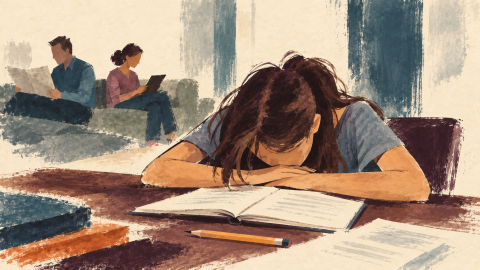

If you were diagnosed with ADHD later in life like I was, you likely felt a sense of grief and confusion after receiving the news.
So you’re telling me that everything — from my constant burn out and mortifying tendency to overshare with strangers to my nonsensical impulse buys — boils down to a four-letter acronym? That I’ve had a medical condition all this time that necessitated treatment, yet I was forced to rawdog life with ADHD? That my family didn’t notice, or didn’t think my struggles were enough to act on?
The Signs Were Always There
As a child I was very energetic. My mom enrolled me in multiple hobbies and activities a day just so she could get some peace. While I don’t remember much from my childhood, I remember being unable to sit still. (That was torture!) Boredom was always an entirely overwhelming feeling — I constantly needed something to do, even if that meant painting the walls of my bedroom, which obviously pleased my mother.
In school I focused on my studies. I was terrified of my teachers and authority figures, so I ensured I was a perfect, grade-A student. I only achieved this by studying well past midnight, only getting about three to four hours of sleep most nights.
I was not like my accomplished peers, on the other hand, who completed homework during “after-school club” with such ease. Their minds were not unfocused by the birds outside the window or the click-clack sound of a teacher’s heels. “Good for her; I could never wear those heels,” I thought. And then suddenly the history essay I needed to finish was overcast by my stress of not being able to remember what was needed to finish the damn thing.
[Read: “You Are Way Too Hard on Yourself” Unspoken Truths About Women with ADHD]
ADHD came up in other ways, too. I was constantly fixated on what others thought of me. I picked up on everything — like the annoyed expression on my local barista’s face when I was indecisive about what to order, or the car honking directed my way due to my excellent driving skills. A dirty look, or a less-than-favorable impression of me would have derailed my whole day. It would utterly consume how I saw myself.
This is where the real ADHD burnout hits. It’s the constant second-guessing, the masking. It’s the outbursts I’d have as a child toward my parents, after acting perfect all day at school. On edge all day, I would get irritated and explosive over the smallest inconveniences, like having my sleeve catch on the door. (I found out during my ADHD assessment that bumping into things and having no spatial awareness is very common. I feel for all of you who have experienced the same challenges with proprioception.)
Now I am not saying ADHD is all bad. I strongly disagree with the sentiment that “ADHD is a superpower,” but it does offer moments of superhuman focus and flow. I found this out while in university, when I thought I had cracked the code to my brain. Being in a flow state felt safe. I would forget to eat, forget to message friends back, and spend up to 14 hours on a project. I would produce amazing results and then, of course, burn out the very next day.
Sometimes I’d abandon projects altogether. This still happens from time to time, as is the case with my garden. I mounted bamboo on the walls, added brickwork, YouTubed every new DIY skill needed for the project, and after cutting wooden planks with a chainsaw-type machine (very scary, would not recommend), I just left it, half done. Now I avoid looking at it.
[Read: “What It Feels Like Living with Undiagnosed ADHD”]
Confronting My Loved Ones
After my diagnosis, I asked my parents directly: How did you not notice?
I asked because I felt I missed the opportunity to find clarity and peace within myself a lot earlier in life. But my parents didn’t have much of an answer. The conversation ranged from, “But you seemed OK, you just had too much energy” to, “You sang that song over and over for 15 days straight to annoy us and because you loved it.” All of that screams ADHD to me, yet I was overlooked.
It did feel bad that my parents showed very little interest in my diagnosis, even going so far as saying things like, “It just means you can’t concentrate, right?” and, “But you have a master’s degree, you surely needed to concentrate for that!” I held back my disappointment and hurt rather than spew. Sure, I got an advanced degree, but I paid the price of burning out every other weekend and holding myself to impossible standards. Somewhere in the process of grieving a life that could have been, I found myself getting a bit petty about it. I sent and reposted Instagram reels that poked fun at parents who never clocked the signs of neurodivergence. I call it coping.
Letting Go and Moving On
I am glad that the how-could-you-not-notice phase is over. I am diagnosed, my parents know, they don’t care to research or understand ADHD, and that is OK. I cannot control the actions of others.
My diagnosis has taught me a lot about myself. It has helped me build trust in myself and empathize with that little girl who just kept thinking “Why am I so different? Why can’t I be normal?”
I am genuinely glad I am not “normal.” I realize now there is no such thing. There are so many not-normal people out there who are wonderfully brilliant and living life on their own terms. I am not quite there yet, but I know I will be.
Late ADHD Diagnosis: Next Steps
ADDITUDE IS HUMAN
Artificial intelligence does not create or edit any written content published by ADDitude. Our editorial team is 100% human, and our mission is simple: listen to and serve our readers with hand-crafted, expert-informed resources. To support ADDitude, please consider subscribing. Your readership and support help make our commitment possible. Thank you.

Advertisement
