
Need assistance?

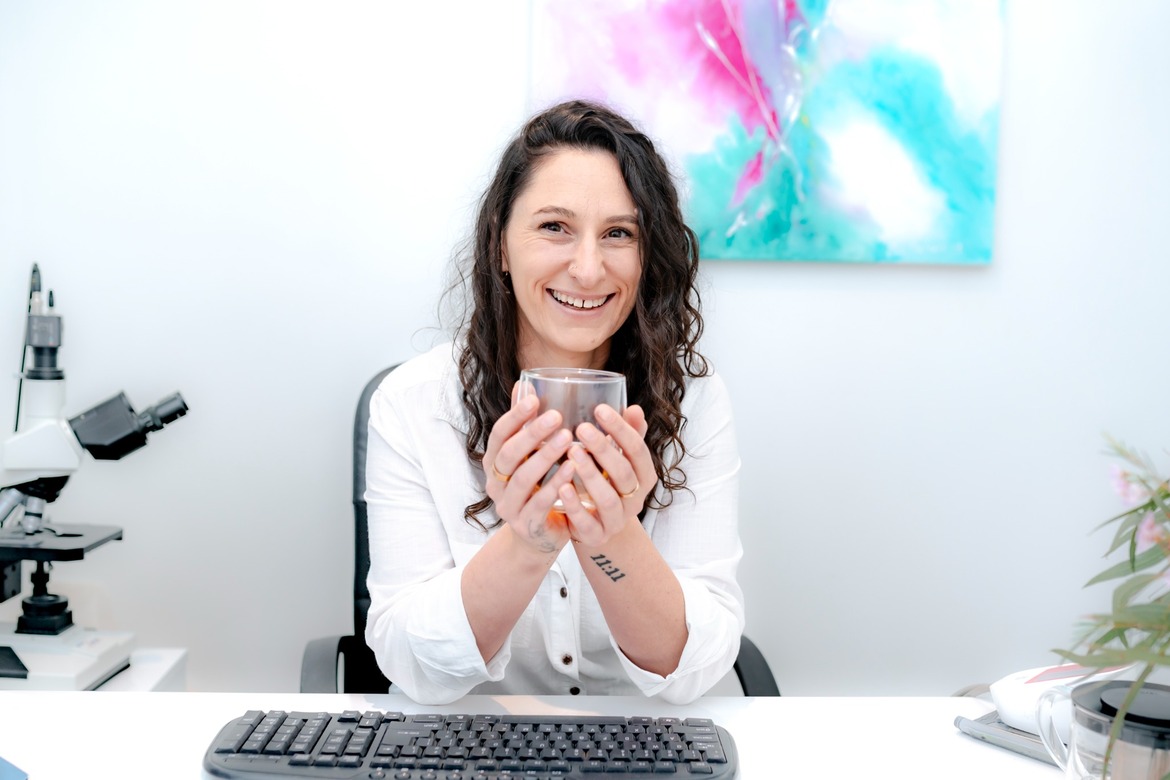

By Amber Carter, Clinical Naturopath
“I’m always tired.”
“I just push through.”
“I get six hours of sleep if I’m lucky.”
“I know I should go to bed earlier, but nighttime is the only time I actually get to myself.”
“It’s all just so hard.”
I hear different versions of these sentences from women all the time.
And somewhere along the way, we seem to have decided that this is simply motherhood.
Of course mothers are tired. Of course you’re overwhelmed. You have kids. What did you expect?
But I wonder when exhaustion became part of the job description.
We talk a lot about the pressure for women to “bounce back” after having children, usually in relation to their bodies. But I think we’re expected to bounce back in almost every part of our lives.
Back to work. Back to exercise. Back to sex. Back to socialising. Back to being the partner, friend, daughter and employee we were before.
Except now there’s a small human, or several of them, depending on us too.
We’re expected to raise the children, run the household, remember the appointments, organise the activities, feed everyone well, maintain our relationships, look after our health, build a career or business and somehow find time for “self-care”.
And preferably do it all while looking like we’re coping.
The mothers I meet aren’t failing at motherhood. Many of them have actually become frighteningly good at functioning while completely depleted.
I think of one particular kind of woman I see often in Western Australia. Her partner works FIFO and, for weeks at a time, she is effectively running the family alone.
She manages the kids, the household and her own work. She tries to eat well, but often doesn’t eat enough. She exercises hard because it’s one of the few places she feels in control. Her anxiety is high, her digestion is struggling and the kids climb into her bed, so she rarely sleeps properly.
Her family live interstate and her friends are mostly mothers carrying their own version of the same load.
She keeps going because somebody has to.
And I don’t think this woman is unusual.

Where did our village go?
Perhaps one of the biggest things we’ve lost in modern motherhood is something humans relied on for generations: other people.
Mothers, grandmothers, sisters, aunts, cousins and neighbours were often nearby. There were more hands to hold babies, prepare food, watch children, pass down knowledge or simply notice when a mother wasn’t coping.
That doesn’t mean motherhood was easier in previous generations, and we shouldn’t romanticise the past. But there is something profoundly different about expecting one woman to perform work that was once shared among many people.
Today, families can live hundreds or thousands of kilometres apart. People move for work. FIFO families can have one parent away for weeks. Grandparents are often still working. Friends are juggling their own children, careers and responsibilities.
We tell mothers they need a village while many of them are quietly realising they don’t actually have one.
And when their bodies and minds begin to struggle under that load, we look at the individual woman and ask what’s wrong with her.
Maybe a better question is: what is contributing to the way she feels?
Anxiety may be real. ADHD may be real. Depression may be real. Perimenopause may be real. Sometimes medication is absolutely appropriate.
But I don’t think receiving a diagnosis should be the end of our curiosity.
When a tired woman sits in front of me, I want to know what else is happening in her body and her life.
Is she eating enough? Is she bleeding heavily every month? Has her cycle changed? When did she last sleep through the night? How much is she exercising? Does she have a history of nutrient deficiencies? What are her iron, B12, folate, vitamin D and thyroid markers doing?
How much is she carrying mentally and emotionally?
And perhaps most importantly:
Who is looking after her?
As a naturopath, I can talk about nourishment, hormones, nutrient deficiencies, nervous system regulation, sleep and movement.
We can talk about magnesium and morning sunlight and protein at breakfast until the cows come home, but supplements cannot replace a village.
Sometimes the problem isn’t that a woman isn’t managing her stress well enough.
Sometimes she simply has too much to manage.
I understand some of this because I’ve lived my own version of it.
I know what it’s like to function in fight-or-flight for too long. To sleep poorly, eat poorly because you’re too busy and use intense exercise to somehow keep yourself going. I know what it’s like to feel your body asking for rest and keep pushing anyway.
Eventually, mine stopped asking politely.
Recovery wasn’t one supplement or one huge lifestyle overhaul. It was rest. Nourishment. Changing how I exercised. Learning to listen earlier. None of those changes felt particularly dramatic at the time.

Looking back, the small things changed everything.
That’s also why I don’t want to hand an exhausted woman another enormous list of things she needs to do.
Sometimes we start with eating enough. Sometimes it’s sleep. Sometimes we need to look at her menstrual cycle, mental health, support network or whether the exercise she’s doing is actually supporting her. Where appropriate, pathology can help us investigate what else might be contributing.
Not because every tired mother has something medically wrong with her.
But because “you’re a mum, of course you’re tired” isn’t an investigation.
I don’t think women need another lesson in how to cope.
Most of the exhausted mothers I meet are already exceptionally good at coping.
That’s how they got this far.
Maybe we need to stop adding more things to their list. Another supplement. Another productivity hack. Another meal plan. Another morning routine. Another way to squeeze self-care into the twenty minutes left after everyone else’s needs have been met.
Sometimes the most important thing a woman can say is simply:
I’m struggling.
And what she needs next isn’t someone telling her how to try harder.
I wish more women knew there is no shame in reaching out or asking for help.
You don’t have to wait until you’re crying alone in the dark, somehow too exhausted to even sleep, knowing that in a few hours you’ll have to get up and do it all again.
Maybe support begins much earlier than that.
With a proper meal. With a blood test. With going to bed. With cancelling the workout. With telling your partner you’re not okay. With letting somebody help.
With admitting that just because you’ve managed to keep going doesn’t mean the way you’ve been living is sustainable.
Motherhood asks an enormous amount from women.
Perhaps we should stop being so impressed by how much a mother can carry, and start asking whether she should have to carry it all in the first place.
Amber Carter is a Clinical Naturopath based in Perth, Western Australia, supporting women with hormones, gut health, skin, sleep, stress and nervous system health. Her approach is realistic, evidence-informed and focused on making health changes achievable within real life. Visit ambercarter.com.au to find out more about her work. You can also connect with her on Instagram and Facebook.

Advertisement
