
Need assistance?


A few months ago, an educator working in the field of autism shared a video titled Nazar Ka Fark (Difference in perspective). It was promoted with a powerful message: watch this one-minute video and see how your life changes.
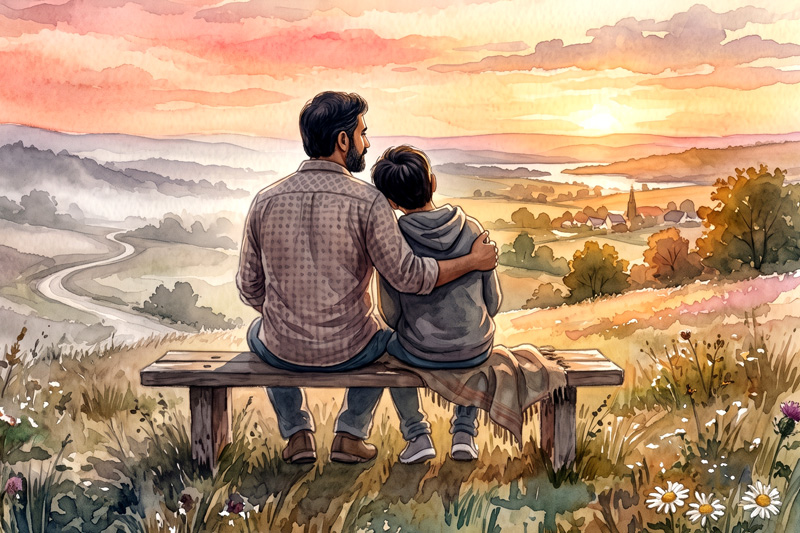
I watched it. As the father of a 17-year-old son on the autism spectrum, the message naturally caught my attention. I appreciated the effort and the positive thought behind it. “Change your nazar” is, after all, something every autism parent would want from society. Do not look at our children with sympathy. Do not judge them merely by what they cannot do. Try to understand them.
Yet one question immediately came to my mind: Can our nazar (perspective) towards autism really change in one minute?
I put this question to the educator. I did not receive an answer, but the question stayed with me — perhaps because my own nazar did not change in a minute. It took me years to change myself. When my son was diagnosed with autism, I thought I understood autism, but I did not. Like most parents, I had expectations about how a child would grow, communicate, learn, and behave. Autism gradually began questioning many of those expectations. I had entered uncharted territory.
There were behaviours I could not understand and situations I did not know how to handle. Sometimes I wondered why my son was not responding like other children. At other times, something apparently insignificant to me would disturb him out of proportion. Initially, I wanted answers. Then I started searching for solutions. Much later, after almost 13 years, I humbled my approach and started looking for understanding.
Perhaps that was when my own nazar actually started changing.
My son taught me that understanding autism does not come merely from knowing its definition. It comes from living alongside it. Therapists, special educators, books, and medical professionals certainly helped us, but they could guide us for only one or two hours a day. My greatest teacher became my son. I learnt by watching him every day. I learnt through mistakes, small successes, and many failures. He taught me to look into minor details and celebrate small gains as victories. I learnt that a behaviour which appeared meaningless to me could have a reason for him, and that communication in any form is something beyond speech.
Most importantly, I gradually stopped asking only, “Why doesn’t he adjust to our world?” and started asking myself, “What best can I do to make his life better?” That change did not happen in sixty seconds. It took years.
This leads me to an uncomfortable question for us autism parents as well: if it took me years to understand my own son, how can I expect a stranger to understand him in one minute?
We frequently ask society to change its attitude towards autism, and rightly so. We do not want people staring at our children. We do not want an unusual movement, sound, or behaviour to become a reason for ridicule. We want schools, workplaces, public spaces, and communities to become more accepting.
But genuine understanding cannot simply be demanded. It has to grow. A one-minute video may create awareness. A song may touch somebody emotionally. A podcast or social-media post may make thousands of people encounter the word autism. All of that has value. But awareness and understanding are not the same thing. A minute may open the door; walking through that door takes much longer.
Changing public vocabulary around neurodiversity is important. Words matter. If society begins speaking about difference with greater dignity and sensitivity, it is progress. But vocabulary alone cannot transform society. There has to be an actionable roadmap for societal and institutional change, followed consistently for years.
For me, that roadmap is simple: awareness leads to understanding. Understanding, developed over time, leads to acceptance. Acceptance creates belonging. Belonging opens avenues for opportunities.
Through opportunities in education, employment, community life, and everyday social interaction, individuals with autism and other disabilities can become contributing members of society. Being accepted and given opportunities also builds something no awareness campaign alone can provide: confidence and self-belief. Every stage requires time. Vocabulary can change quickly. Attitudes usually take longer. Institutions may take longer still. An inclusive society cannot be built in a minute.
The growing conversation around neurodiversity and disability pride also needs balance. There is nothing wrong in a parent taking pride in his child, believing in the child’s abilities, or celebrating every achievement. Such positive thinking can give a family tremendous strength. But there is a thin line between hope and false bravado.
Every autistic child is not a savant. Exceptional savant abilities are rare. If we convince ourselves that every difficulty or unusual behaviour represents an extraordinary hidden ability waiting to emerge, we may stop seeing the areas where our child genuinely needs help. If a child struggles with communication, sensory regulation, learning, behaviour, or daily living skills, those difficulties need attention. Positive thinking should encourage action, not replace it.
Pride should remove shame. It should not remove reality. Acceptance should not become inaction. A child who is overwhelmed needs understanding and appropriate support, not merely a slogan telling the world that everything is extraordinary.
This is why I am uncomfortable with both extremes in the autism conversation. At one extreme, autism is presented only as a tragedy. At the other, it is romanticized as a gift, a superpower, or a guarantee of hidden genius. Neither tells the complete story. Autism can involve immense challenges, sometimes accompanied by unique strengths. It can be profoundly disabling for one person while another may live much more independently. Above all, autism is deeply individual.
There is another danger: sometimes guidance starts sounding like a guarantee. Autism never follows a predictable script. What works wonderfully for one child may not work for another. One child may acquire speech; another may communicate differently throughout life. One family may witness rapid progress, while another may struggle for years despite doing everything within its means.
Therefore, guidance is welcome. Guarantees are not. Before imparting knowledge, every source of information — whether therapist, educator, parent, influencer, or professional — should perhaps introspect: are we genuinely helping families understand autism, or are we making autism appear extraordinary, lucrative, or almost supernatural? Autism needs neither fear nor glorification. It needs understanding, timely support, realistic hope, and respect for every person’s individuality.
My two roles — as a doctor and a father — have taught me another lesson. Autism is not experienced in textbooks. It is experienced at 2 a.m. when a child cannot sleep, during a meltdown in a crowded marketplace, in therapy centres, school meetings, and hospital waiting rooms, and in the quiet fears parents carry about the future. Doctors often speak the language of science. Parents often speak the language of lived experience. Both perspectives are valid.
Science gives us diagnostic clarity, evidence, and interventions. Lived experience tells us what those definitions mean inside a home. Parents teach doctors what textbooks cannot; doctors teach parents what emotions alone cannot. The autism community does not need a battle between science and empathy. It needs a partnership between them.
Accepting neurodiversity does not mean pretending that difficulties do not exist. An autistic person may require therapy, education, communication support, or lifelong assistance. Recognizing neurological difference should never mean denying these needs. At the same time, providing support should never mean denying the dignity or individuality of the person receiving it.
After seventeen years of parenting my son, I still cannot claim that I completely understand autism. My son continues to surprise, challenge, and teach me. That is why the phrase Nazar Ka Fark stayed with me.
Changing our nazar towards autism is not like an eye examination in which one lens is changed and suddenly everything becomes clear. Human understanding requires time, interaction, patience, observation, and the willingness to unlearn what we once believed to be “normal.” So, by all means, let us make that one-minute video, write that song, record that podcast, and carry that placard. They can sow the seed. But the seed must still be watered through education, inclusion, institutional reform, opportunities, and repeated human interaction before it becomes a tree.
The question I asked the educator remained unanswered. I no longer need an answer. Seventeen years with my son have already given me one.
Changing vocabulary may take a minute. Changing the nazar may take years. Changing society may take a generation. But every genuine change has to begin somewhere. Awareness can begin in a minute. Understanding, acceptance, and belonging take time.
Disclaimer: The views expressed in this article are personal and do not necessarily represent those of the author’s organization.
Lt Col (Dr) Amit Kumar, MBBS, is Joint Director of Hospital Services at the Regional Centre ECHS in Jaipur, India, and can be reached at [email protected] or +91 8826220568.

Advertisement
