
Need assistance?

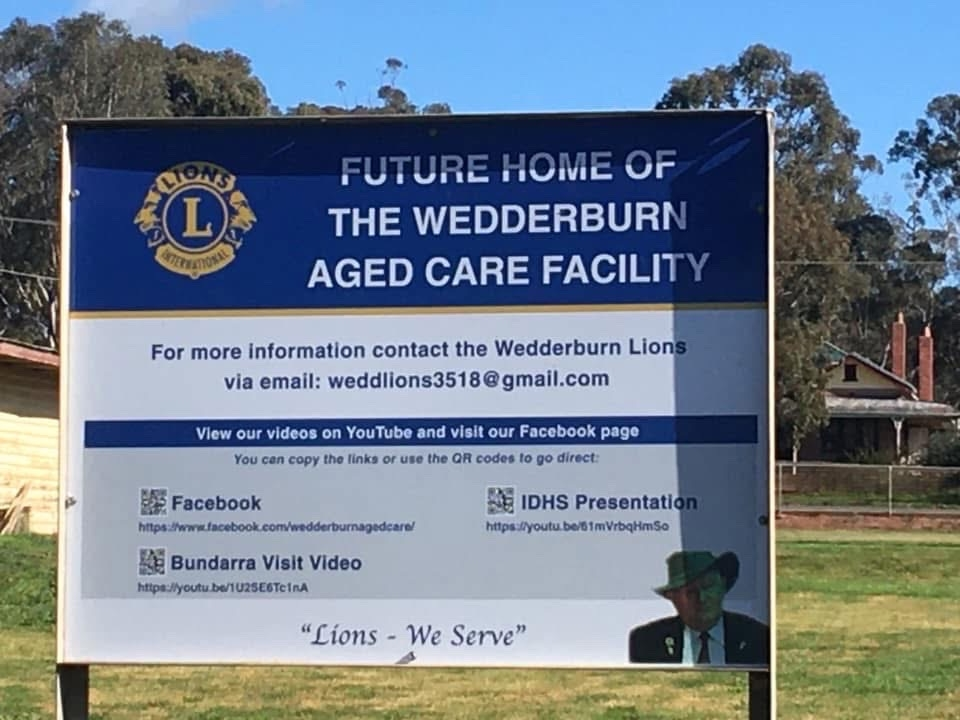

The Wedderburn Lions Club has developed a community-owned residential model that it believes can offer a practical and sustainable pathway for delivering low-level aged care in communities like its own. Wedderburn, in central Victoria, is classified as a small rural town (MM5) under the Modified Monash Model and Outer Regional Australia in the Australian Statistical Geography Standard.
The club says the proposed model demonstrates strong potential, but regulatory and legislative barriers are preventing projects like this from progressing.
Wedderburn Lions Club aged care sub-committee spokesperson Jude Raftis says there are no aged care facilities within 30 kilometres of the town, which means many older people must leave when they need support.
“They helped build the community, and now all of a sudden we’re kicking them out,” Raftis tells Australian Ageing Agenda. “We’ve been pushing for 15 years now to get something, and we’ve been continually told by state and federal governments that there’s no money for aged care.”

But she says the former gold-mining town – home to about 850 people today – has land for an aged care facility gifted by the council. The club has also developed a business plan for a supported residential service. An SRS is a state government-regulated accommodation option for people who need extra support to live in the community.
The business plan features a 30-bed facility running “about $150,000 profit a year” at 70 per cent occupancy, says Raftis, who’s been involved in the project since the beginning.
“There’s no CEO, there’s no director of nursing. They’re not top-heavy, so they’re quite sustainable if they’re run properly,” says Raftis.
The service would offer low-level care to help older people remain in the community. It would operate as a home care service, rather than a residential aged care home. It would be staffed by personal care workers and funded through residents’ Support at Home packages and part of their pensions.
“The business plan has also been approved by the department,” Raftis tells AAA, referring to communication with the Victorian Department of Families, Fairness and Housing in May 2024. “They saw it and then they said, yes, you can go ahead and register. When we went to register, we couldn’t register because we don’t have a building.”
And there’s no way to get a building without approval to run the service, she adds.
“We’re in a position now where we want someone from government to do something about changing the legislation or bringing something in that will give us a staged approval … so that at the end of the build, we can register,” Raftis says.
However, she says the club has been unable to get any traction, despite this potentially being a suitable model for use across regional Australia.
“It’s community run, not-for-profit. It’s sustainable. The government will not have to fork out any money to run it once it’s built.”
Club calls on governments

To help garner support, the Wedderburn Lions Club is convening the Wedderburn Community Aged Care Forum on Friday 9 October 2026 to present the work completed to date and the proposed community-owned aged care model.
The club is seeking federal and state representatives, local government, health and aged care providers, industry leaders, community organisations, the media and community members to attend.
Raftis says the club needs and wants government input to progress the project.
“They might want to tweak it a bit and make it even more sustainable. There might be ways that they can come on board and say, ‘That’s a great idea, but maybe you could add this, take away that.’”
It “would be great” if representatives from aged care organisations operating in regional areas also attended to add their expertise, she says.
The forum will:
- discuss the barriers preventing the project from progressing
- explore opportunities for collaboration
- identify practical pathways to deliver an aged care facility for Wedderburn
- consider how this model could benefit other rural communities facing the same challenges.
Government stakeholder responses
According to the DFFH website, a supported residential service is an accommodation option but not a clinical service. It may only provide assistance with activities of daily living or coordinate with health and community services to assist residents to access any additional support they need. Since 1 July 2024, Victoria’s Social Services Regulator has overseen SRS regulation in the state.
AAA asked the state regulator if it was aware of and supported the club’s proposal and if it would attend the 9 October forum.
“The SSR welcomes all providers who are committed to providing quality services to their community and adhering to the Social Services Standards. We engage with prospective providers through the SSR’s registration process,” a spokesperson from the Social Services Regulator told AAA.
AAA also asked local, state and national government bodies about attending the forum, their support for the proposal and how they were supporting Wedderburn seniors to age safely in their community.
A spokesperson for the Department of Health, Disability and Ageing confirmed representatives from the department’s Local Network will attend the forum on 9 October 2026.
“The department is aware of the work of the Wedderburn Lions Club and recognises their efforts, along with other local stakeholders, to identify innovative solutions that support older people to remain in their community as they age.”
As the proposed SRS would be subject to state regulatory and approval processes, it would not form part of the Australian Government’s residential aged care system. However, Australian Government-funded in-home care programs such as Support at Home and the Commonwealth Home Support Program could be delivered to SRS residents, who are eligible for aged care and the service is appropriate to that setting.
The Support at Home program currently supports older residents in Loddon. There are also three residential aged care services in the shire, but they are in Boort and Inglewood, which are approximately 45 and 30 kilometres drive, respectively, from Wedderburn. The spokesperson says the department continues to engage with local communities and stakeholders to understand aged care needs and opportunities in rural and regional areas.
A spokesperson for Loddon Shire Council said the council recognises the significant interest in this matter and acknowledges the efforts of the Wedderburn Lions Club in exploring options to support older residents to remain living in their local community.
“Council has provided the Wedderburn Lions Club with access to land should the project progress. This demonstrates council’s willingness to support initiatives that may deliver community benefit, while allowing the proposal to progress through the necessary development and consideration processes,” the spokesperson told AAA.
“Since council ceased delivering aged care services in June 2023, its role has shifted from being a direct provider to supporting, advocating for and promoting organisations that deliver aged care and ageing support services. Council continues to work collaboratively with government agencies, service providers and community organisations to help ensure older residents have access to services that enable them to age safely and remain living in their local communities wherever possible.”
A spokesperson for DFFH told AAA that “aged care or the establishment of an SRS are not matters for this department” and referred to the Social Services Regulator.
Wedderburn’s SRS model
Raftis is hopeful stakeholders will attend the forum, which comes about seven weeks ahead of Victoria’s state election on 28 November.
She says the Lions Club got involved after quite a few members had to put their parents into aged care.
“They’ve all had to go out of the town, which impacts on their mental health. It puts a strain on family. I mean, most of their friends are elderly, so they can’t travel to go and visit,” she says.

The club pursued the SRS model after government departments told them there would be no money available for an aged care facility.
“We’re trying to bridge a gap between people who can’t live at home anymore, and end-of-life care,” Raftis says. “We’re not looking for nursing home accommodation. This is more hostel-type living … which still keeps them in their community.”
Wedderburn’s staffing model includes shifts of personal carers in addition to a manager – who is preferably a registered nurse – and ancillary workers to provide cleaning, cooking and administrative services.
The club expects to attract workers from among Wedderburn residents who are currently travelling to work in facilities outside of town.
“We don’t think we would have any problem staffing it,” says Raftis.
The forum is scheduled to take place on Friday 9 October 2026 from 2pm at Wedderburn Mechanics Institute Hall. Email weddlions3518@gmail.com for more information.
We hope you enjoyed this article – please add your comments below
Visit our features section for more in-depth stories

Advertisement
