
Need assistance?


Sarcopenia: The Silent Muscle Loss Worth Stopping Early

Did you know that you start losing muscle as early as your thirties, even if you feel great? This silent process is called sarcopenia, and most people only discover it when it is significantly harder to restore things to their original state. The good news is that you have much more in your hands than you think.
Sarcopenia is not an inevitable fate of old age and does not only affect seniors. You are fundamentally shaping its pace today through your lifestyle. In this article, you will learn how to recognise its first signals, why it arises, and specifically what to do to maintain your strength and mobility even in your seventies.
Quick Summary: What is sarcopenia and how to prevent it?
- What is sarcopenia: The gradual loss of muscle mass, strength, and function associated with ageing. Since 2016, it has been officially recognised as a disease with the diagnostic code ICD-10 M62.84.
- When it begins: After age 30, we lose 3–8% of muscle mass per decade; after age 60, the pace accelerates significantly. Strength, however, declines 2–5 times faster than muscle mass itself.
- Why it matters: Strong muscles regulate blood sugar, protect bones, and support the brain, heart, mood, and longevity.
- How to prevent it: Strength training, adequate protein intake, quality sleep, and potentially creatine supplementation are important.
- Beware of myths: Sarcopenia is not just a problem for seniors and is not an inevitable fate of old age. Starting prevention is worthwhile at any age.
What is sarcopenia?
Sarcopenia is a skeletal muscle disease characterised by reduced muscle strength, muscle mass or quality, and impaired physical performance. The European Working Group on Sarcopenia in Older People (EWGSOP) officially classifies it in its 2019 revised consensus as a muscle disease with adverse changes that accumulate throughout life.[11]
The term sarcopenia comes from the Greek expressions “sarx” (flesh, muscle) and “penia” (loss, deficiency). The term was first introduced in 1989 by American researcher Irwin Rosenberg to name age-related loss of muscle mass. [2]

Is sarcopenia a recognised disease?
Yes, since October 2016, sarcopenia has been officially recognised as a distinct disease with its own diagnostic code ICD-10-CM M62.84. The code was approved by the U.S. Centres for Disease Control and Prevention (CDC) and took effect on October 1, 2016. This recognition moved sarcopenia from the category of problems typical of normal ageing to the level of a clinically diagnosable and treatable disease. [2,10]
What are the diagnostic criteria for sarcopenia according to EWGSOP?
The main criterion for diagnosing sarcopenia is no longer low muscle mass, but low muscle strength. In 2019, EWGSOP fundamentally revised the original 2010 definition and shifted the emphasis from the quantity of muscles to their functionality, because muscle strength better predicts adverse health outcomes than muscle mass alone. [3,11]
EWGSOP distinguishes three stages of sarcopenia
- Probable sarcopenia: reduced muscle strength (e.g., handgrip strength, sit-to-stand test) [11]
- Confirmed sarcopenia: reduced muscle strength, documented low muscle mass or quality (measured using DXA or bioelectrical impedance analysis) [11]
- Severe sarcopenia: reduced muscle strength, low muscle mass, impaired physical performance [11]
Cut-off values for sarcopenia criteria according to EWGSOP2
| Parameter | Men | Women |
|---|---|---|
| Handgrip strength | 27 kg | 16 kg |
| Chair stand test (5×) | >15 seconds | >15 seconds |
| Appendicular skeletal muscle mass index (ASMI) | 7.0 kg/m² | 5.5 kg/m² |
| Gait speed | ≤ 0.8 m/s | ≤ 0.8 m/s |
For rapid screening of individuals at risk, the SARC-F questionnaire with five questions (strength, assistance in walking, rising from a chair, climbing stairs, falls) is used. A score of ≥4 points out of 10 suggests suspected sarcopenia and requires further examination. [29]
What is the difference between primary and secondary sarcopenia?
Primary sarcopenia is caused solely by aging, while the causes of secondary sarcopenia include other factors in addition to age. This distinction is crucial because it affects the method of treatment. [11]
- Primary sarcopenia arises as part of natural biological aging without any other obvious cause [11]
- Secondary sarcopenia is a consequence of chronic diseases (e.g., heart failure, kidney failure, oncological diseases), lack of movement, malnutrition, or long-term immobility. [11]
What is sarcopenic obesity?
Sarcopenic obesity is a clinical condition in which the loss of muscle mass and function occurs simultaneously with the excessive accumulation of adipose tissue. In 2022, the European Society for Clinical Nutrition and Metabolism (ESPEN), along with the European Association for the Study of Obesity (EASO), officially agreed for the first time on its definition and diagnostic criteria. [16]
This is a particularly risky condition because excess fat and muscle loss support each other. Adipose tissue increases inflammation, insulin resistance, and muscle loss, while muscle loss reduces energy expenditure and promotes further fat storage. A large-scale meta-analysis showed that sarcopenic obesity affects approximately 11% of people over 60 worldwide, with a significant increase after age seventy. [12,19]

What is the difference between natural muscle loss and sarcopenia?
Natural muscle loss is a gradual, physiological process that occurs in every person after age 30 without a significant impact on normal functioning. In contrast, sarcopenia is a clinically significant condition where the loss of muscle strength and mass begins to limit daily life. For example, problems with walking, carrying groceries, or simply rising from a chair occur. The boundary between these two states is defined by specific threshold values (handgrip strength, gait speed, muscle mass) established by EWGSOP. [10,11]
When does natural muscle mass loss begin?
Natural muscle mass loss begins inconspicuously as early as age 30 and accelerates significantly after age 60. In one’s thirties and forties, the loss is so gradual that most people do not notice it at all, especially if they remain active. [36,45]
How much muscle does a person lose per decade?
After age 30, a person loses approximately 3–8% of muscle mass per decade, with this loss accelerating significantly after age 60. Specific numbers depend on gender, level of physical activity, nutrition, and overall health. [37]
Rate of muscle mass loss by age
| Age | Muscle mass loss | Muscle strength loss |
|---|---|---|
| 30–50 years | 3–8% per decade | slight, often negligible |
| 50–60 years | acceleration, especially in women after menopause | faster, loss over 1.5% per year |
| After age 70 | 0.64–0.98% per year | loss of 2.5–4% per year |
| After age 80 | loss can reach up to 30–40% compared to peak | significant decline |
[20,27,37]
Why does muscle strength decline faster than muscle mass?
Muscle strength declines with age 2–5 times faster than muscle mass because ageing also affects muscle quality, neural regulation, and the ability to activate muscle fibres. This is precisely why EWGSOP in 2019 included muscle strength as the main criterion for diagnosing sarcopenia. It better predicts poor health outcomes than the amount of muscle mass alone. [11,27]
This phenomenon also has a separate technical name – dynapenia (from the Greek “dynamis” – strength and “penia” – deficiency). It is a condition where a person loses muscle strength without significant loss of muscle mass.[27]
You might be interested in these products:
How to recognise sarcopenia? Diagnosis and screening
Sarcopenia is recognised using a combination of simple functional tests, questionnaires, and, if necessary, imaging methods that measure muscle mass. European professional societies recommend a gradual 4-step algorithm that begins with screening of individuals at risk and ends with determining the severity of the disease. The goal is to detect sarcopenia as early as possible while it can still be reversed. [11]
What are the first warning signs of sarcopenia?
The first warning signs of sarcopenia manifest as a gradual deterioration in the ability to perform common activities. This is precisely why most people attribute them to normal ageing and seek help only when the disease has progressed to a more limiting phase.
Most common early signs of sarcopenia
- slower walking
- greater difficulty rising from a chair or bed
- weaker handgrip
- frequent tripping or falls
- fatigue during previously routine activities
- unintentional weight loss (loss of muscle mass while maintaining body fat)
- reduction in calf circumference
Who should undergo sarcopenia screening?
- all adults over 65
- individuals after long periods of immobility (e.g., after injury, surgery, longer hospital stay)
- patients with chronic diseases
- people with unintentional weight loss
- individuals experiencing repeated falls
- people with malnutrition
- women in menopause whose strength and fitness are declining rapidly
How does the diagnosis of sarcopenia proceed step by step?
The EWGSOP recommends a 4-step diagnostic algorithm known by the acronym F-A-C-S (Find – Assess – Confirm – Severity). [11]
- Find risk: the SARC-F questionnaire is used, or suspicion from a physician
- Assess muscle strength: handgrip strength is measured with a dynamometer or the chair stand test (5 repetitions)
- Confirm low muscle mass: to confirm the diagnosis, it is necessary to measure muscle mass using DXA, BIA, or other imaging methods
- Determine severity: physical performance is evaluated, such as gait speed over 4 meters, or the Timed Up and Go Test (TUG) [11]

Why is muscle mass important for healthy ageing?
Muscle mass is the largest metabolic and hormonally active organ in the body, which affects blood sugar levels, bone health, brain health, and mental well-being. Muscles function as an endocrine organ that produces hundreds of signalling molecules (myokines) that communicate with other organs. Because of this, strong muscles are one of the most important prerequisites for a long and high-quality life. [31,33]
1. How do muscles help control blood sugar?
After a meal, when insulin levels rise, skeletal muscles are responsible for approximately 75–80% of glucose uptake from the blood, making them the primary organ for regulating glycemia (blood sugar levels). [14]
Muscles store excess sugar in the form of glycogen. The more muscle mass you have, the more glucose they can store and the less sugar remains in the bloodstream. [14]
2. How do muscles protect bones?
Strong muscles support bones in staying strong and dense. With every movement, muscles pull on tendons, which transfer tension to the bones, and they adapt by creating new bone tissue. [22]
This process is called mechanotransduction and is the main reason why strength training is among the most effective ways to prevent osteoporosis. For example, a study published in the Journal of Cachexia, Sarcopenia and Muscle showed that muscle quality helps protect against femoral neck fractures (a fracture that carries a high risk of loss of independence for seniors). [38]

3. How do muscles communicate with the brain?
During muscle contraction, signalling molecules (myokines) are released that cross the blood-brain barrier (the barrier between brain tissue and the bloodstream) and support the creation of new neurons. The best-known are irisin, BDNF, IL-6, and cathepsin B, which activate neuroplasticity in the hippocampus, the part of the brain responsible for memory and learning. [30,43,44]
This is precisely why physical activity has a proven protective effect on the brain, and even extensive meta-analyses confirm that stronger people have a lower risk of dementia and Alzheimer’s disease. [25]
4. How do muscles affect mood and mental health?
Regular strength training has a demonstrable antidepressant effect, which is even comparable to some pharmacological treatments. A large meta-analysis of 33 studies published in JAMA Psychiatry found that strength training significantly reduces symptoms of depression regardless of age, gender, or health status. This occurs, for example, thanks to the release of myokines or the control of inflammatory processes in the body. Because of this, exercise influences overall mental health and mood. [21,30]
5. How do muscles support heart health?
Higher muscle strength is associated with a lower risk of cardiovascular diseases. A large international PURE study published in The Lancet, which followed over 142,000 people in 17 countries, showed that every 5 kg of higher handgrip strength reduces the risk of cardiovascular death by approximately 17%. Furthermore, exercise lowers LDL cholesterol, blood pressure, and inflammatory markers. [26,39]
6. Does stronger musculature prolong life?
Yes, people with higher muscle strength live longer on average and in better health. A meta-analysis of 42 studies with a sample of more than 3 million people found that every 5 kg decrease in handgrip strength increases the risk of death from any cause by 16%. Muscle strength is now even considered one of the best simple indicators of biological age. [26,40]
What are the main causes of sarcopenia?
Sarcopenia is a multifactorial disease, which means it arises from a combination of multiple causes. Some factors you cannot influence (age, genetics), but most of them are in your hands. The following factors are the main triggers behind muscle loss.
1. How do hormonal changes affect muscle mass?
The decline of anabolic hormones during ageing (testosterone, estrogen, growth hormone) reduces the body’s ability to maintain and build muscle mass. When these hormones decrease, muscle synthesis (muscle building) slows down.
Most important hormonal changes during ageing:
- Testosterone in men: Declines by approximately 1% per year after age 30. [17]
- Estrogen in women: A sharp decline during menopause accelerates muscle mass loss. According to studies, postmenopausal women lose muscle faster than women of the same age with still preserved hormonal function. [7]
- Growth hormone and IGF-1: Their production after age 30 declines by approximately 14% per 10 years, which slows down recovery after physical exertion. [32]
You can learn more about the effects of hormones or their low levels in the following articles.
2. Why do women lose muscle faster after menopause?
Estrogen helps protect muscle tissue, and its sharp decline during menopause accelerates the loss of muscle mass and strength. This hormone affects the functioning of cells responsible for muscle regeneration, protein synthesis, and insulin sensitivity. [7]
A study published in the International Journal of Women’s Health found that the incidence of sarcopenia in women rises from approximately 7% before menopause to 27–32% after menopause. [7]

3. What is anabolic resistance and how does it affect muscles?
Anabolic resistance is the reduced ability of older muscles to respond to protein and training. Older muscles need a higher intake of the amino acid leucine and a higher intensity of exercise to achieve the same muscle response as the muscles of younger people. [4]
Seniors therefore need more protein per meal (25–30 g of high-quality protein). Protein should be evenly distributed throughout the day, and the quality of protein is also very important. The content of leucine, which triggers muscle synthesis, is key. [4]
4. How does a sedentary lifestyle promote sarcopenia?
Physical inactivity is the strongest modifiable factor for sarcopenia because muscles begin to disappear without stimulation, regardless of age. Sarcopenia is thus not a problem that suddenly appears at seventy, but the result of decades during which the body received little stimulus.
What happens to muscles during lack of movement?
- After just 2 weeks of reduced activity (e.g., fewer than 1,500 steps per day), healthy young people lose approximately 3% of leg muscle mass. [6]
- A study in JAMA showed that 10 days of bed rest causes muscle loss in healthy seniors comparable to years of normal ageing. [24]
- Sedentary office work (8 or more hours a day sitting) is today one of the most common risk factors for sarcopenia even in people of working age.
- A sedentary lifestyle accelerates muscle loss 2–3 times compared to active people of the same age.
What is the risk of sitting all day?
It’s not just about how much you exercise; it also matters how much of the day you spend sitting. Studies show that long hours of sitting have a negative effect on muscles even in people who exercise regularly (the so-called “active couch potato” syndrome). The body needs regular activity throughout the day, not just a one-hour workout after work. [5]

5. How does sleep affect muscle mass?
Lack of sleep increases cortisol levels (stress hormone) and reduces growth hormone production, inducing a catabolic state unfavourable for muscles. Researchers from the USA found, for example, that one night of restricted sleep reduces muscle protein synthesis. [28]
Do you want to know how to improve sleep quality? Our other articles can help you.
6. Which chronic diseases accelerate sarcopenia?
Secondary sarcopenia arises as a result of chronic diseases that affect metabolism, nutrition, or physical activity.
Most common diseases associated with sarcopenia
- type 2 diabetes mellitus
- chronic heart failure
- chronic obstructive pulmonary disease (COPD)
- chronic kidney disease
- oncological diseases
- malnutrition
How to prevent sarcopenia and build muscle mass at any age?
Sarcopenia can be effectively prevented and, in many cases, reversed through a combination of strength training, adequate intake of high-quality protein, selected dietary supplements, and quality sleep.
1. What type of movement is best against sarcopenia?
Strength training is clearly the most effective type of exercise against sarcopenia. For example, a meta-analysis published in the European Review of Ageing and Physical Activity found that even in older adults, it increases muscle strength by 30–60% and the amount of muscle mass by 5–10% after just a few months of regular training. [35]
How to perform strength training?
- 2–3 times per week [8]
- with weights in the range of 60–80% of maximum strength, i.e., weights with which you can handle 8–12 repetitions [1]
- for a duration of 30–45 minutes per workout [42]
- with dumbbells, weight machines, resistance bands, and body weight
- progressive increase in load (progressive overload) is important [15]
In the following articles, we will advise you on how to create your own training plan.

2. How much protein do you need to maintain muscle?
To maintain muscle mass, adults need 1.0–1.2 g of protein per kilogram of body weight daily; seniors and individuals with diseases need up to 1.2–1.5 g/kg. [4]
- distribute protein into at least three daily meals
- 25–30 g of high-quality protein per serving effectively supports muscle synthesis
- the content of the amino acid leucine is key – it is most abundant in dairy products, eggs, meat, fish, and whey protein
Read more about the health benefits, sources, or optimal daily protein intake in the article Protein: Functions in the Body, Optimal Intake, Food Sources, and the Risks of Deficiency
3. Which supplements work against sarcopenia?
Creatine combined with strength training has the most proven effect against sarcopenia. There is also evidence of effectiveness for vitamin D or omega-3 fatty acids.
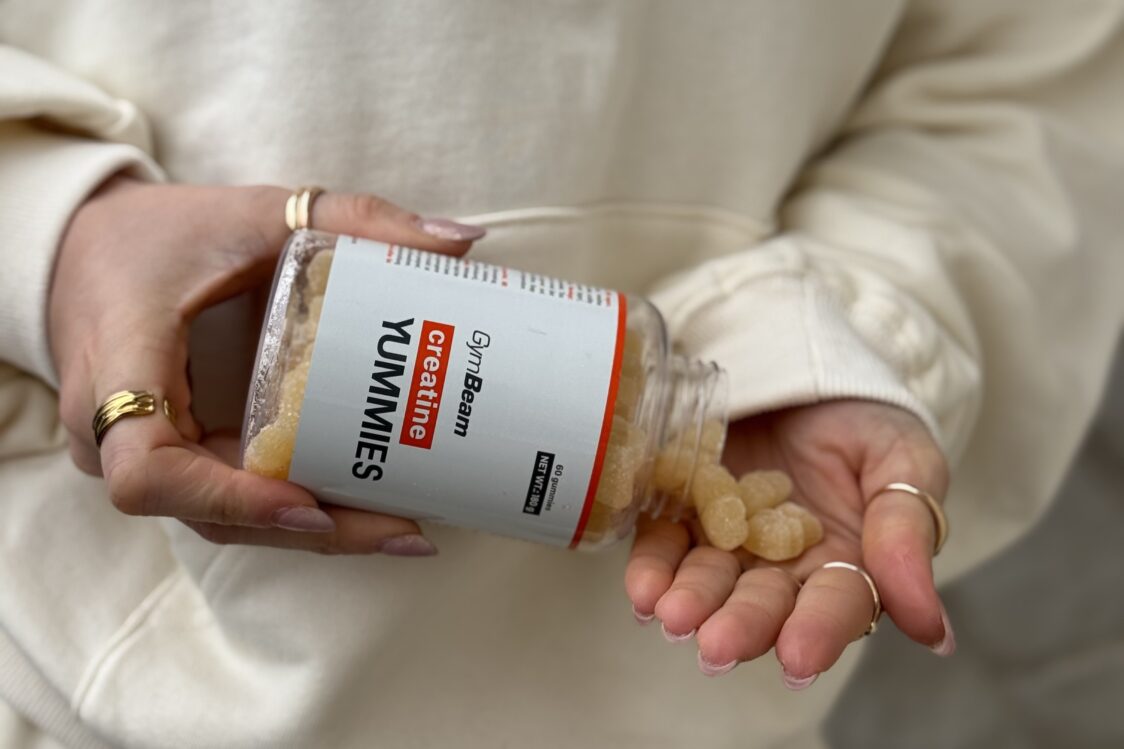
Creatine
A meta-analysis by American and Serbian scientists published in the journal Nutrients showed that creatine combined with strength training supports the increase of muscle mass and strength in older adults more significantly than training alone. [18]
It is recommended to take 3–5 g of creatine daily over the long term.
Read about the effects of creatine in our other articles.
Vitamin D
Supplementation of vitamin D can improve muscle strength if supplemented when its level in the body is deficient (less than 30 ng/ml). The recommended daily dose for adults, according to the European Food Safety Authority (EFSA), is 15 µg (600 IU). For seniors, 20 µg (800 IU) is often recommended. [9,41,46]
We will tell you more about vitamin D in the article Vitamin D: Why Is It So Important, What Causes Deficiency, and How to Supplement It?
Omega-3 fatty acids
According to studies, omega-3s can mitigate anabolic resistance and improve the muscle response to protein in seniors. The recommended intake is 2 g of EPA+DHA daily or consumption of fatty sea fish 2–3 times per week. [34]
Read more about omega-3 fatty acids in the article Healthy and Unhealthy Fats: Which Foods to Eat and Which to Avoid?
4. What role do sleep and recovery play in sarcopenia prevention?
Quality sleep of 7–9 hours a day is key for growth hormone production, muscle regeneration, and preservation of muscle mass. During deep sleep, the most growth hormone is released, and the body has the space to repair muscle fibres damaged during training. [13]
5. When is the best time to start preventing sarcopenia?
It is most effective to start preventing sarcopenia as early as possible, ideally in youth, when you are building a maximum muscle reserve for your entire life. However, it is true that strength training brings improvement at any age. A meta-analysis of 14 randomised controlled trials with 561 participants published in the European Review of Ageing and Physical Activity confirmed that in seniors with sarcopenia, strength training significantly improves handgrip strength, lower limb strength, gait speed, and overall physical performance after just a few weeks of regular exercise. [23]
What works for sarcopenia and what doesn’t?
| With proven effect | Promising, but need more evidence | Not enough on its own |
|---|---|---|
| Strength training 2–3 times per week | Omega-3 fatty acids (2 g EPA + DHA daily) | Creatine without strength training |
| Protein 1.0–1.5 g/kg of body weight daily | Higher leucine intake | Vitamin D with adequate levels in the body |
| Creatine 3–5 g daily in combination with strength training | Sedentary lifestyle | |
| Vitamin D with proven deficiency | ||
| Quality sleep 7–9 hours daily | ||
| Progressive overload |
Frequently Asked Questions (FAQ)
1. At what age does sarcopenia begin?
Natural muscle mass loss begins as early as age 30, but we generally speak of sarcopenia as a disease after age 60. Between ages 30 and 60, a person loses approximately 3–8% of muscle mass per decade; after age 60, the rate of loss accelerates significantly. In women after menopause, this process occurs faster.
2. What are the first symptoms of sarcopenia?
The first symptoms of sarcopenia are slower walking, difficulty rising from a chair without support, a weak handgrip, and more frequent tripping or falls. A person first loses explosive power and fast movements, which are important for reacting to sudden stimuli. These signals are often mistakenly attributed to “normal ageing,” even though they are warning signs that deserve attention.
3. How to test for sarcopenia at home?
The simplest home test is completing the SARC-F questionnaire (5 questions about strength, walking, and falls) and the chair stand test. If it takes you longer than 15 seconds to stand up and sit down 5 times without using your hands, or if you scored 4 or more out of 10 points on the SARC-F questionnaire, you have an increased risk of sarcopenia and should consult a physician.
4. Can sarcopenia be reversed?
Yes, sarcopenia can be slowed down and, in many cases, reversed through a combination of strength training and adequate protein intake. Studies show that strength training brings improvement at any age, even in people over 90. With regular exercise 2–3 times per week, a person can increase muscle strength by 30–60% within a few months.
5. Is there a difference in muscle loss between men and women?
Yes, men lose more muscle mass, but women experience a sharper acceleration after menopause due to the decline in estrogen. Estrogen has a protective effect on muscle tissue, and its deficiency leads to increased inflammation, impaired protein synthesis, and faster muscle mass loss. [27]
6. Which imaging methods are used to measure muscle mass?
Dual-energy X-ray absorptiometry (DXA) and bioelectrical impedance analysis (BIA) are most commonly used to measure muscle mass, while CT and MRI imaging methods are considered the gold standard. [48]
7. What is the best exercise against sarcopenia?
Strength (resistance) training is the most effective form of exercise against sarcopenia. It is recommended to exercise 2–3 times a week with a weight that allows you to complete 8–12 repetitions, for a duration of 30–60 minutes. Dumbbells, weight machines, resistance bands, and bodyweight exercises all work – the key is progressive overload.
8. Does creatine help with sarcopenia?
Yes, creatine combined with strength training has the best-supported effect on increasing muscle mass and strength in older adults. The standard daily dose is 3–5g; it is safe, and meta-analyses have not shown a negative impact on the kidneys or liver. However, without strength training, creatine alone does not have a significant effect.
9. What is the difference between sarcopenia and cachexia?
Sarcopenia is muscle loss associated with ageing or inactivity, while cachexia is extreme muscle and weight loss during serious illness (such as cancer or heart failure). In sarcopenia, weight may not change significantly, whereas in cachexia, there is a simultaneous loss of both muscle and fat. Cachexia has a worse prognosis and requires specialised treatment.
10. Can I have sarcopenia even if I am not old?
Yes, secondary sarcopenia can affect younger people during long-term inactivity, chronic illness, malnutrition, or prolonged immobilisation. A sedentary lifestyle is now a significant risk factor even for people of working age. Just 2 weeks of reduced physical activity leads to a decrease in leg muscle mass of approximately 3% in healthy young people.
11. What is inflammaging?
Inflammaging is chronic low-level inflammation that gradually develops with age and accelerates the breakdown of muscle proteins through elevated levels of inflammatory markers TNF-α and IL-6. Unlike acute inflammation during infection, it occurs silently and without visible symptoms, but long-term it damages muscle tissue and worsens anabolic resistance.
12. What are the best strength exercises for seniors?
The best exercises for seniors are those that train movement patterns from everyday life – squat (standing up from a chair), press (lifting objects overhead), pull (carrying groceries), and walking up stairs. All these exercises also improve balance and reduce the risk of falls, which is just as important in preventing sarcopenia as muscle strength itself.
13. Is hydration important for muscle mass?
Yes, skeletal muscles consist of approximately 75% water, and even mild dehydration of around 2% of body fluids measurably reduces muscle strength, endurance, and coordination. In seniors, this effect is more pronounced because the sense of thirst decreases with age and the risk of chronic dehydration increases. The recommended intake is 1.5 to 2 litres of water per day, more during physical activity, with light yellow urine being a reliable indicator of sufficient hydration.
14. What is the difference between sarcopenia and dynapenia?
Dynapenia refers to the loss of muscle strength without significant loss of muscle mass, while sarcopenia involves the simultaneous loss of mass and strength, and potentially impaired physical performance. In dynapenia, muscles may still be present in terms of volume, but their quality, neural activation, and ability to generate force are reduced.
15. What is the difference between sarcopenia and osteoporosis?
Sarcopenia is the loss of muscle mass and strength, while osteoporosis is the loss of bone density and strength; both conditions often occur simultaneously with ageing in a combination called osteosarcopenia. The relationship between them is bidirectional, as weak muscles provide less mechanical stimulation to bones and accelerate bone loss, while fragile bones lead to inactivity and further muscle loss.
What Should You Take Away from This?
Sarcopenia, or the gradual loss of muscle mass and strength, is not an inevitable fate of old age, but the result of decades during which muscles received little stimulation. It begins as early as after the age of 30, but you fundamentally control its pace. Strong muscles protect bones, regulate blood sugar, and support the brain, heart, and longevity.
Three things determine how much strength you carry into old age. Movement is important, especially strength training, sufficient protein, and, of course, time. The earlier you start, the greater the reserve you build. Sarcopenia cannot be stopped by a pill, but rather by lifestyle, and every workout, quality meal, and night of good sleep is an investment that will pay off.
[1] AMERICAN COLLEGE OF SPORTS MEDICINE American College of Sports Medicine position stand. Progression models in resistance training for healthy adults. – https://pubmed.ncbi.nlm.nih.gov/19204579/
[2] ANKER, S.D. et al. Welcome to the ICD‐10 code for sarcopenia. – https://pmc.ncbi.nlm.nih.gov/articles/PMC5114626/
[3] BAHAT, G. et al. Comparison of standard versus population-specific handgrip strength cut-off points in the detection of probable sarcopenia after launch of EWGSOP2. – https://pubmed.ncbi.nlm.nih.gov/33432867/
[4] BAUER, J. et al. Evidence-based recommendations for optimal dietary protein intake in older people: a position paper from the PROT-AGE Study Group. – https://www.sciencedirect.com/science/article/pii/S1525861013003265
[5] BISWAS, A. et al. Sedentary time and its association with risk for disease incidence, mortality, and hospitalization in adults: a systematic review and meta-analysis. – https://pubmed.ncbi.nlm.nih.gov/25599350/
[6] BREEN, L. et al. Two weeks of reduced activity decreases leg lean mass and induces “anabolic resistance” of myofibrillar protein synthesis in healthy elderly. – https://pubmed.ncbi.nlm.nih.gov/23589526/
[7] BUCKINX, F. – AUBERTIN-LEHEUDRE, M. Sarcopenia in Menopausal Women: Current Perspectives. – https://pmc.ncbi.nlm.nih.gov/articles/PMC9235827/.
[8] BULL, F.C. et al. World Health Organization 2020 guidelines on physical activity and sedentary behaviour. – https://bjsm.bmj.com/content/54/24/1451
[9] CALCIUM, I. of M. (US) C. to R.D.R.I. for V.D. And et al. Dietary Reference Intakes for Adequacy: Calcium and Vitamin D. – https://www.ncbi.nlm.nih.gov/books/NBK56056/
[10] CAO, L. – MORLEY, J.E. Sarcopenia Is Recognized as an Independent Condition by an International Classification of Disease, Tenth Revision, Clinical Modification (ICD-10-CM) Code. – https://www.jamda.com/article/S1525-8610(16)30181-5/abstract
[11] CRUZ-JENTOFT, A.J. et al. Sarcopenia: revised European consensus on definition and diagnosis. – https://pubmed.ncbi.nlm.nih.gov/30312372/
[12] DANIELEWICZ, A.L. et al. Analysis of sarcopenic obesity prevalence and diagnostic agreement according to the 2022 ESPEN and EASO Consensus in hospitalized older adults with severe obesity. – https://pmc.ncbi.nlm.nih.gov/articles/PMC11222587/
[13] DATTILO, M. et al. Sleep and muscle recovery: endocrinological and molecular basis for a new and promising hypothesis. – https://pubmed.ncbi.nlm.nih.gov/21550729/
[14] DEFRONZO, R.A. – TRIPATHY, D. Skeletal Muscle Insulin Resistance Is the Primary Defect in Type 2 Diabetes. – https://pmc.ncbi.nlm.nih.gov/articles/PMC2811436/
[15] DENT, E. et al. International Clinical Practice Guidelines for Sarcopenia (ICFSR): Screening, Diagnosis and Management. – https://pubmed.ncbi.nlm.nih.gov/30498820/
[16] DONINI, L.M. et al. Definition and Diagnostic Criteria for Sarcopenic Obesity: ESPEN and EASO Consensus Statement. – https://pmc.ncbi.nlm.nih.gov/articles/PMC9210010/
[17] FELDMAN, H.A. et al. Age trends in the level of serum testosterone and other hormones in middle-aged men: longitudinal results from the Massachusetts male aging study. – https://www.ovid.com/journals/jceme/abstract/00004678-200202000-00029~age-trends-in-the-level-of-serum-testosterone-and-other?redirectionsource=fulltextview
[18] FORBES, S.C. et al. Meta-Analysis Examining the Importance of Creatine Ingestion Strategies on Lean Tissue Mass and Strength in Older Adults. – https://www.mdpi.com/2072-6643/13/6/1912
[19] GAO, Q. et al. Global prevalence of sarcopenic obesity in older adults: A systematic review and meta-analysis. – https://pubmed.ncbi.nlm.nih.gov/34229269/
[20] GOODPASTER, B.H. et al. The loss of skeletal muscle strength, mass, and quality in older adults: the health, aging and body composition study. – https://www.researchgate.net/publication/6719763_The_Loss_of_Skeletal_Muscle_Strength_Mass_and_Quality_in_Older_Adults_The_Health_Aging_and_Body_Composition_Study
[21] GORDON, B.R. et al. Association of Efficacy of Resistance Exercise Training With Depressive Symptoms: Meta-analysis and Meta-regression Analysis of Randomized Clinical Trials. – https://pubmed.ncbi.nlm.nih.gov/29800984/
[22] HIRSCHFELD, H.P. et al. Osteosarcopenia: where bone, muscle, and fat collide. – https://pubmed.ncbi.nlm.nih.gov/28733716/
[23] CHEN, N. et al. Effects of resistance training in healthy older people with sarcopenia: a systematic review and meta-analysis of randomized controlled trials. – https://pmc.ncbi.nlm.nih.gov/articles/PMC8588688/
[24] KORTEBEIN, P. et al. Effect of 10 days of bed rest on skeletal muscle in healthy older adults. – https://pubmed.ncbi.nlm.nih.gov/17456818/
[25] KUNUTSOR, S.K. et al. Handgrip strength and risk of cognitive outcomes: new prospective study and meta-analysis of 16 observational cohort studies. – https://pubmed.ncbi.nlm.nih.gov/35013908/
[26] LEONG, D.P. et al. Prognostic value of grip strength: findings from the Prospective Urban Rural Epidemiology (PURE) study. – https://www.thelancet.com/journals/lancet/article/PIIS0140-6736(14)62000-6/abstract
[27] MITCHELL, W.K. et al. Sarcopenia, Dynapenia, and the Impact of Advancing Age on Human Skeletal Muscle Size and Strength; a Quantitative Review. – https://pmc.ncbi.nlm.nih.gov/articles/PMC3429036/
[28] NEDELTCHEVA, A.V. et al. Insufficient sleep undermines dietary efforts to reduce adiposity. – https://pmc.ncbi.nlm.nih.gov/articles/PMC2951287/
[29] NISHIKAWA, H. et al. Screening Tools for Sarcopenia. – https://pmc.ncbi.nlm.nih.gov/articles/PMC8627754/
[30] PEDERSEN, B.K. Physical activity and muscle-brain crosstalk. – https://pubmed.ncbi.nlm.nih.gov/30837717/
[31] PEDERSEN, B.K. – FEBBRAIO, M.A. Muscles, exercise and obesity: skeletal muscle as a secretory organ. – https://www.ovid.com/journals/ntre/abstract/10.1038/nrendo.2012.49~muscles-exercise-and-obesity-skeletal-muscle-as-a-secretory?redirectionsource=fulltextview
[32] SATTLER, F.R. Growth hormone in the aging male. – https://pmc.ncbi.nlm.nih.gov/articles/PMC3940699/
[33] SEVERINSEN, M.C.K. – PEDERSEN, B.K. Muscle–Organ Crosstalk: The Emerging Roles of Myokines. – https://pmc.ncbi.nlm.nih.gov/articles/PMC7288608/
[34] SMITH, G.I. et al. Dietary omega-3 fatty acid supplementation increases the rate of muscle protein synthesis in older adults: a randomized controlled trial123. – https://pmc.ncbi.nlm.nih.gov/articles/PMC3021432/
[35] TAN, Z. et al. Optimizing prescription of resistance training for body composition, muscle strength, and physical performance in older adults with sarcopenia: a systematic review and meta-analysis. – https://pmc.ncbi.nlm.nih.gov/articles/PMC12908291/
[36] VOLPI, E. et al. Muscle tissue changes with aging. – https://pmc.ncbi.nlm.nih.gov/articles/PMC2804956/
[37] VOLPI, E. et al. Muscle tissue changes with aging. – https://pmc.ncbi.nlm.nih.gov/articles/PMC2804956/
[38] WANG, L. et al. Muscle density is an independent risk factor of second hip fracture: a prospective cohort study. – https://pmc.ncbi.nlm.nih.gov/articles/PMC9178374/
[39] WESTCOTT, W.L. Resistance training is medicine: effects of strength training on health. – https://pubmed.ncbi.nlm.nih.gov/22777332/
[40] WU, Y. et al. Association of Grip Strength With Risk of All-Cause Mortality, Cardiovascular Diseases, and Cancer in Community-Dwelling Populations: A Meta-analysis of Prospective Cohort Studies. – https://pubmed.ncbi.nlm.nih.gov/28549705/
[41] XIONG, A. et al. Effects of active vitamin D analogues on muscle strength and falls in elderly people: an updated meta-analysis. – https://www.frontiersin.org/journals/endocrinology/articles/10.3389/fendo.2024.1327623/full
[42] ZHAO, H. et al. The Effect of Resistance Training on the Rehabilitation of Elderly Patients with Sarcopenia: A Meta-Analysis. – https://pmc.ncbi.nlm.nih.gov/articles/PMC9739568/
[43] Frontiers | Muscle–brain crosstalk mediated by exercise-induced myokines – insights from experimental studies. – https://www.frontiersin.org/journals/physiology/articles/10.3389/fphys.2024.1488375/full
[44] Multiple Roles in Neuroprotection for the Exercise Derived Myokine Irisin – PMC. – https://pmc.ncbi.nlm.nih.gov/articles/PMC8086837/
[45] Preserve your muscle mass. – https://www.health.harvard.edu/healthy-aging-and-longevity/preserve-your-muscle-mass
[46] Scientific opinion on the tolerable upper intake level for vitamin D, including the derivation of a conversion factor for calcidiol monohydrate – https://efsa.onlinelibrary.wiley.com/doi/10.2903/j.efsa.2023.8145

Advertisement
