
Need assistance?

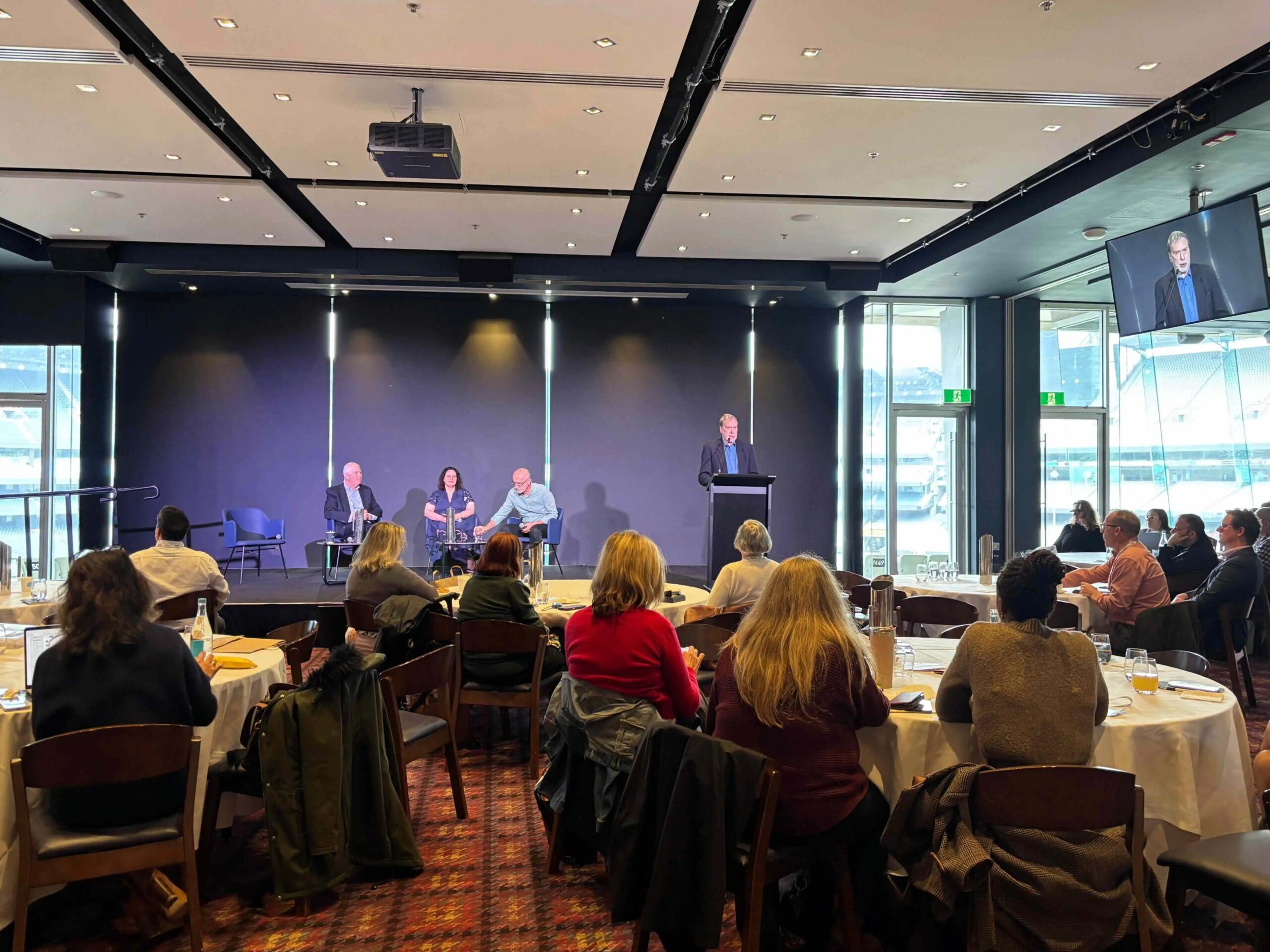

The CHSP Alliance Summit has drawn 100 in-person attendees along with 900 online registrations in Melbourne this week to discuss the future of the Commonwealth Home Support Program and a “no wrong door” approach to older people accessing care.
The 40-member alliance was instrumental in the government’s decision to extend the program, as noted by Shadow Minister for Health and Aged Care Senator Anne Ruston on day one of the Invox CHSP National Conference 2026.
Now the alliance is focusing on testing the following five propositions amid the program’s redesign:
- make the standalone CHSP the permanent primary tier of aged care
- retain and improve grant funding
- implement fairer funding and indexation
- frame CHSP as a preventative program
- make CHSP a better front door to aged care.
These points were discussed in depth with summit attendees.

Alliance co-convenor Paul Sadler encouraged attendees to engage in a letter-writing campaign, outlining to their local members examples and case studies of how these five propositions could help fix a primary care tier of aged care and ensure the aged care system operates effectively in the future.
“We believe that if we continue to work together as an alliance, we can ensure the continuation of growth of these absolutely vital services for non-Australians,” said Mr Sadler.
CHSP as a preventative program
Council on the Ageing NSW chief executive officer Gohar Yazdabadi joined a panel at the summit. When considering CHSP as a preventative program, she said it’s important to think “beyond the context of the aged care system” and instead within the “context of ageing and the ageing system.”

(supplied)
Looking at ageing in Australia at the moment is “not a particularly fantastic outlook,” Ms Yazdabadi said.
While Australians are living longer, ageism is rife, older people are experiencing high rates of loneliness and the sandwich generation of unpaid family carers is under increasing pressure.
“What we really know, and what we feel every day, and what I hear every day is that once upon a time there was a social contract and that social contract was you paid your taxes, you did everything that was asked of you by government and when you reached a certain age you were going to be looked after. And I think that we can now say that that social contract has been ripped up and thrown into the bin,” Ms Yazdabadi said.
“So when we have a look at that climate, we then have to look and see well, if we’re talking about prevention what is it that we can look at in this aged care system that can be the most preventative, and it really falls down to the CHSP model.
“It is the model that keeps people connected. It is the model that keeps people in community. It is the model that keeps people well.”

CHSP needs multiple referral points
Also key to the summit discussion was the policy position of no wrong door for care access.
Explaining what they mean by no wrong door, Mr Sadler said the CHSP Alliance is advocating for “a significantly better integration between CHSP, aged care and primary health care,” and for a system that can be accessed from multiple referral points – not just the formal assessment process.
“The aged care system has become progressively more siloed over the last three decades and recent reforms have reinforced that isolation of aged care from health care – this is not in the interests of older people or their families,” he said.
“The division between health and aged care needs is artificial and the barrier that results in delays, duplication and confusion rather than channelling every older person through the My Aged Care system to get into aged care, we are advocating for access to CHSP to be based on a no-wrong-door policy.”

While not saying older people should not go through formal assessment channels when needed, Mr Sadler said they do believe people are being forced through the My Aged Care system for things as simple as needing a meal.
“And the consequence of doing that is we’ve created a funnel and the funnel now has hundreds of thousands of people waiting to get assessed and access through to the system,” he said.
Instead, if an older person is in hospital, the hospital discharge planner should be able to be a point of referral to a CHSP service, or if a First Nations elder approaches a First Nations CHSP service provider that should be enough to start accessing basic-level services.
He added that the alliance believes general practitioners will play an important role in that, as they frequently know older people well already and already do health assessments for people aged over 75.
Flexi Care general manager Adrian Morgan – who joined Mr Sadler on the summit panel – added that the sector is not asking for something radical with the no-wrong-door proposal.
“We’re actually just saying let’s go back to the way it used to work,” Mr Morgan said. “It worked very well before My Aged Care was launched and then it became the choke point. There’s no need for it.”
Interested in aged care policy? Read more articles here
Sign up to our free newsletter and subscribe to AAA magazine for the complete aged care picture

Advertisement
